A refrigerator that stops cooling is more than an inconvenience, and it quickly becomes a race against time to protect your food. Whether you’re dealing with a refrigerator which is not cooling, a fridge which is not cooling but the freezer works, or a refrigerator that simply isn’t cold enough, identifying the cause early can help prevent food spoilage and avoid more expensive repairs.
Fortunately, a warm fridge doesn’t automatically mean you need a replacement. A significant number of temperature issues stem from fixable parts such as dust-covered condenser coils, restricted air vents, broken fans, or excessive ice accumulation. This means a simple repair is often all you need.
In this guide, we’ll explain the most common reasons a refrigerator stops cooling, the troubleshooting steps you can safely perform yourself, and when it’s time to call UpFix for professional Refrigerator Repair in Orlando and throughout Central Florida.
Why Is My Refrigerator Not Cooling?
Modern refrigerators cool food by continuously removing heat from inside the cabinet and releasing it through the condenser system. Several components must work together correctly to maintain safe temperatures.
If one of these components fails, the refrigerator may struggle to cool properly or stop cooling altogether. Common causes include:
- Dirty condenser coils.
- Blocked airflow inside the refrigerator.
- Failed evaporator fan motors.
- Frost buildup around the evaporator.
- Defrost system failures.
- Faulty thermostats or sensors.
- Compressor or refrigerant problems.
How a Refrigerator Actually Keeps Food Cold
Many homeowners assume the refrigerator and freezer cool independently. In reality, most modern refrigerators cool the fresh-food compartment using cold air generated in the freezer section.
The evaporator coil located behind the freezer panel absorbs heat, while the evaporator fan circulates cold air throughout both compartments. When airflow becomes restricted or one of these components fails, cooling performance suffers. This is why a refrigerator can become warm while the freezer continues working normally.
Quick Checks to Try First
Before scheduling service, try a few simple inspections that can sometimes restore proper cooling.
- Verify the temperature settings
Accidental temperature changes happen more often than people realize. You should first confirm that the refrigerator is set between 37°F and 40°F, and that the freezer is set around 0°F. Additionally, make sure that no control lock or vacation mode has been accidentally activated.
- Check the door seals
Damaged or loose door gaskets allow warm, humid Florida air to enter the refrigerator. You can usually tell you have a gasket problem if you notice excess condensation, frost buildup, longer compressor run times, or if your food starts spoiling faster than normal.
- Make sure air vents are not blocked
Avoid placing food containers directly against interior vents. Blocked vents restrict airflow and can create warm spots inside the refrigerator compartment.
- Reset the refrigerator
If the issue appeared suddenly, unplugging the refrigerator for several minutes before restarting may help clear minor electronic control issues on some models.
For more appliance maintenance tips, visit the Blog section of the UpFix website.
The #1 Fix: Clean the Condenser Coils
One of the most overlooked causes of a refrigerator not cooling enough is dirty condenser coils.
What Do Condenser Coils Do?
Condenser coils release heat that has been removed from inside the refrigerator. As the refrigerator operates, dust, lint, and pet hair accumulate on these coils, reducing their ability to dissipate heat efficiently.
How Dirty Coils Cause Cooling Problems
When refrigerator condenser coils become heavily coated with debris:
- The compressor works harder.
- Energy consumption increases.
- Cooling performance decreases.
- Component wear accelerates.
This problem is particularly common in homes with pets.
When Cleaning the Coils Solves the Problem
If both compartments feel warmer than normal but the refrigerator is still running, cleaning the coils may restore normal operation. Always disconnect power before cleaning and use a vacuum or condenser coil brush to remove debris.
Refrigerator Not Cooling but Freezer Works
One of the most common service calls we receive is from homeowners noticing their fresh food section is warm, while the freezer is still freezing perfectly.
Because almost every modern unit uses cold air blown over from the freezer to cool the fridge, a cold freezer means your compressor is likely fine. Instead, you are dealing with an airflow problem.
Evaporator & Condenser Fan Motors
The evaporator fan is responsible for circulating cold air from the freezer into the fresh food compartment. If this motor burns out or gets stuck, the circulation stops completely.
As a result, cooling becomes uneven, and you are left with a fridge not cold but freezer is.
Similarly, a jammed damper (the small door regulating how much cold air enters the fridge) will restrict that airflow and cause internal temperatures to rise quickly.
Frost Buildup & the Defrost System
Sometimes, heavy frost accumulates on the back panel of the freezer and physically blocks the vent between the two compartments. This usually points to a defrost system failure, not a sealed-system disaster.
Modern refrigerators rely on an automatic defrost cycle to keep ice away. When it fails, ice takes over. The three main culprits are:
- The Defrost Heater: Designed to melt away accumulated frost during scheduled cycles.
- The Defrost Thermostat: Monitors the temperature to control the heater safely.
- The Control Board: The electronic “brain” that coordinates the entire defrost operation.
When any of these parts break down, frost builds up relentlessly until the airflow is completely choked off.
The good news? Whether it is a broken fan, a stuck damper, or a faulty defrost heater, these are routine repairs, not full replacements, and they are usually fixed the very same day.
Sealed-System Failures: Compressor & Refrigerant (Call a Pro)
Not all refrigerator cooling problems are simple repairs. Sometimes the issue lies within the sealed refrigeration system itself. Warning signs include:
- Both compartments are warm.
- The compressor runs continuously.
- Little or no frost develops on the evaporator.
- Unusual compressor noises.
- Cooling gradually worsens over time.
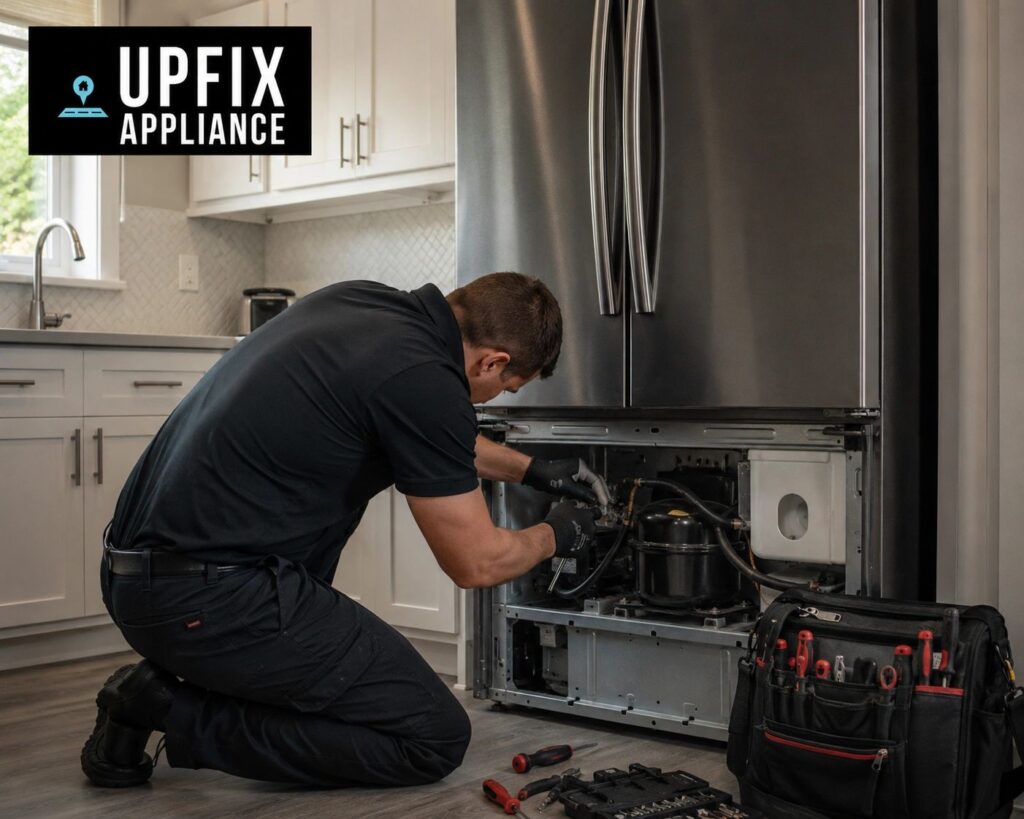
Possible causes include compressor failure, refrigerant leaks, or restrictions in refrigerant flow.
Unlike fan motors or thermostats, sealed-system repairs require specialized tools and training. According to the U.S. EPA Section 608 Technician Certification Requirements, refrigerant handling must be performed by certified professionals. Refrigerants cannot legally be recovered, charged, or serviced without proper certification.
For this reason, compressor and refrigerant-related repairs should always be left to qualified technicians.
Food Safety: What to Do While Your Fridge Is Warm
A refrigerator problem quickly becomes a food safety concern. According to FoodSafety.gov, refrigerated food should generally remain at or below 40°F to minimize bacterial growth.
How Long Can Food Stay Safe?
As a general rule:
- An unopened refrigerator keeps food cold for approximately 4 hours during a cooling failure.
- A full freezer can maintain safe temperatures for approximately 48 hours if left unopened.
Prioritize High-Risk Foods
Move meat, poultry, seafood, dairy products, and cooked leftovers first.
When Food Should Be Discarded
If perishable foods remain above 40°F for more than 2 hours, they may no longer be safe to consume. When in doubt, prioritize safety.
Repair or Replace? How to Make the Smart Call
A refrigerator not cooling does not automatically mean replacement is necessary. In many cases, repairs are cost-effective and can add years of service life.
Repair Often Makes Sense When:
- The refrigerator is under 8 years old.
- The repair costs less than 50% of replacement value.
- The issue involves fan motors, defrost components, sensors, thermostats, or door gaskets.
Replacement May Be Better When:
- The compressor has failed.
- A major sealed-system repair is required.
- The refrigerator is over 10 years old.
- Multiple expensive components have failed.
Most refrigerators last between 10 and 15 years with proper maintenance. Built-in units often justify more extensive repairs because replacement costs can be significantly higher.
Before making a decision, schedule a professional evaluation through Refrigerator Repair.
Central Florida: Heat, Storm Season & Commercial Refrigeration
Refrigerators in Orlando and throughout Central Florida face unique operating conditions. High outdoor temperatures force refrigeration systems to work harder, especially in garages, utility rooms, and poorly ventilated spaces.
Florida’s long storm season creates additional challenges. Power outages, voltage fluctuations, and electrical surges can affect control boards, compressors, and other electronic components. It’s not uncommon for homeowners to discover cooling problems after severe thunderstorms or hurricane-related outages.
Humidity also contributes to:
- Increased frost formation.
- Door gasket wear.
- Condensation issues.
- Longer compressor run times.
Regular maintenance becomes even more important in these conditions.
Restaurants, Hotels & the FDA Food Code (Walk-Ins & Reach-Ins)
Commercial refrigeration failures can result in significant product loss and operational disruption. Restaurants, hotels, convenience stores, resorts, and vacation rentals depend on reliable refrigeration to maintain food safety standards.
Preventive maintenance helps reduce downtime and protect inventory. Businesses operating food service facilities should also remain informed about local licensing requirements, including resources available through the Orange County Business Tax Receipt (BTR) program when applicable.
When to Call UpFix (Serving Orlando & Central Florida)
While some issues can be resolved through basic troubleshooting, others require professional diagnosis. Contact UpFix if:
- The refrigerator is completely warm.
- The freezer and refrigerator have both stopped cooling.
- You hear repeated clicking from the compressor area.
- Frost continues returning after defrosting.
- The refrigerator leaks refrigerant.
- The compressor is suspected to be failing.
At UpFix, we understand how important a reliable refrigerator is for your home or business. Our team is ready to provide the prompt service you need.
Our technicians are fully trained to diagnose and resolve these specific cooling failures. We bring the right tools and professional expertise to get your appliance working perfectly again.
We safely and efficiently service both residential and commercial refrigeration systems throughout Orlando and Central Florida.
Learn more about our services in Appliances or schedule professional Refrigerator Repair through Contact.
If your refrigerator’s ice production has also stopped, ask about our Ice Maker Repair services.
Final Thoughts
A refrigerator not cooling can be alarming, but many cooling problems are caused by repairable issues rather than catastrophic equipment failure.
As discussed throughout this guide, problems such as dirty condenser coils, airflow restrictions, failed fan motors, frost buildup, and defrost system malfunctions are among the most common causes of cooling loss. Identifying the source of the problem early can help protect your food, improve efficiency, and prevent more expensive repairs later.
If basic troubleshooting doesn’t restore proper temperatures, a professional diagnosis can quickly determine whether you’re dealing with a routine repair or a more significant sealed-system issue.
For more appliance care tips and troubleshooting resources, visit our Blog, learn more about our company on the About page, or return to the Home page. When your refrigerator stops cooling, UpFix is ready to help homeowners and businesses throughout Orlando and Central Florida get back to safe, reliable operation.